

Warning: is_file(): open_basedir restriction in effect. File(/www/wwwroot/ew.panyouwl.com/.aegis-local-secrets.php) is not within the allowed path(s): (/www/wwwroot/ew.panyouwl.com/aegismetals.net/:/tmp/) in /www/wwwroot/ew.panyouwl.com/aegismetals.net/wp-config.php on line 23
 Raney Nickel Mesh Electrode-Aegis

Продукция

Главная > Продукция > Продукция > Raney Nickel Mesh Electrode

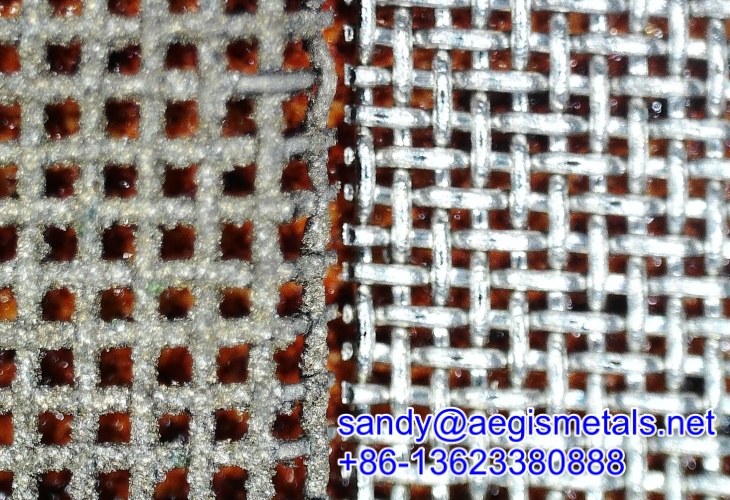
Raney Nickel Mesh Electrode

Подробные спецификации

Comparison with Modern Alternatives

While highly effective, Raney nickel mesh electrodes are sometimes compared to newer materials:

Feature Raney Nickel Mesh Electrode Modern Alternatives (e.g., Pt/C, Ni-Mo alloys on PTL)
Cost Low (uses abundant Ni). High for Pt-based; moderate for advanced Ni alloys.
Activity Very High (geometric area). Can be higher (Pt) or comparable (advanced alloys).
Stability Good in alkali, but can slowly deactivate (sintering, poisoning). Pt/C can degrade in alkali; some new alloys offer excellent stability.
Surface Area Extremely high (internal pores). High, but often from nano-particles on a support.
Technology Maturity Mature, industrial-scale. Some are emerging (R & D to early commercial).
Особенности
  • Exceptionally High Surface Area: The primary advantage. The leaching process creates a nano-porous structure, exposing a vast number of active nickel sites.

  • High Catalytic Activity: Excellent for reactions involving hydrogen (e.g., hydrogen evolution, hydrogenation) and oxygen (e.g., oxygen reduction) due to nickel’s inherent properties and the surface area.

  • Good Stability in Alkaline Media: Raney nickel is stable and commonly used in concentrated KOH or NaOH electrolytes, which is crucial for alkaline water electrolysis and fuel cells.

  • Gas Permeability: The mesh structure combined with the porous catalyst facilitates efficient three-phase (solid catalyst/liquid electrolyte/gas reactant) contact, which is critical for gas diffusion electrodes.

  • Established Manufacturing: The process for making Raney-type catalysts is well-known and scalable.

Применение
  1. Alkaline Water Electrolysis (AWE):

    • Function: Used as the cathode for the Hydrogen Evolution Reaction (HER).

    • Why: It is a highly active, durable, and cost-effective catalyst for producing hydrogen in traditional industrial electrolyzers. Its high surface area reduces the overpotential for HER, improving efficiency.

  2. Alkaline Fuel Cells (AFCs):

    • Function: Often used as the anode for the Hydrogen Oxidation Reaction (HOR).

    • Why: It efficiently catalyzes the splitting of hydrogen fuel in the alkaline environment. Raney nickel anodes have been a cornerstone of historical AFC technology (e.g., NASA space shuttle).

  3. Industrial Electrochemical Hydrogenation:

    • Function: As a cathode to hydrogenate organic compounds.

    • Why: Its high activity allows for selective hydrogenation of various substrates at lower temperatures and pressures compared to thermal catalytic processes.

  4. Chlor-Alkali Electrolysis (Historical/Modern Variants):

    • Function: As a cathode in some cell designs.

    • Why: Its efficiency in HER improves the overall energy consumption of chlorine and caustic soda production.

Отправить запрос

Получите котировку или организуйте обратный звонок от одного из наших специализированных агентов по продажам

Запросить сейчас

Сообщение X
